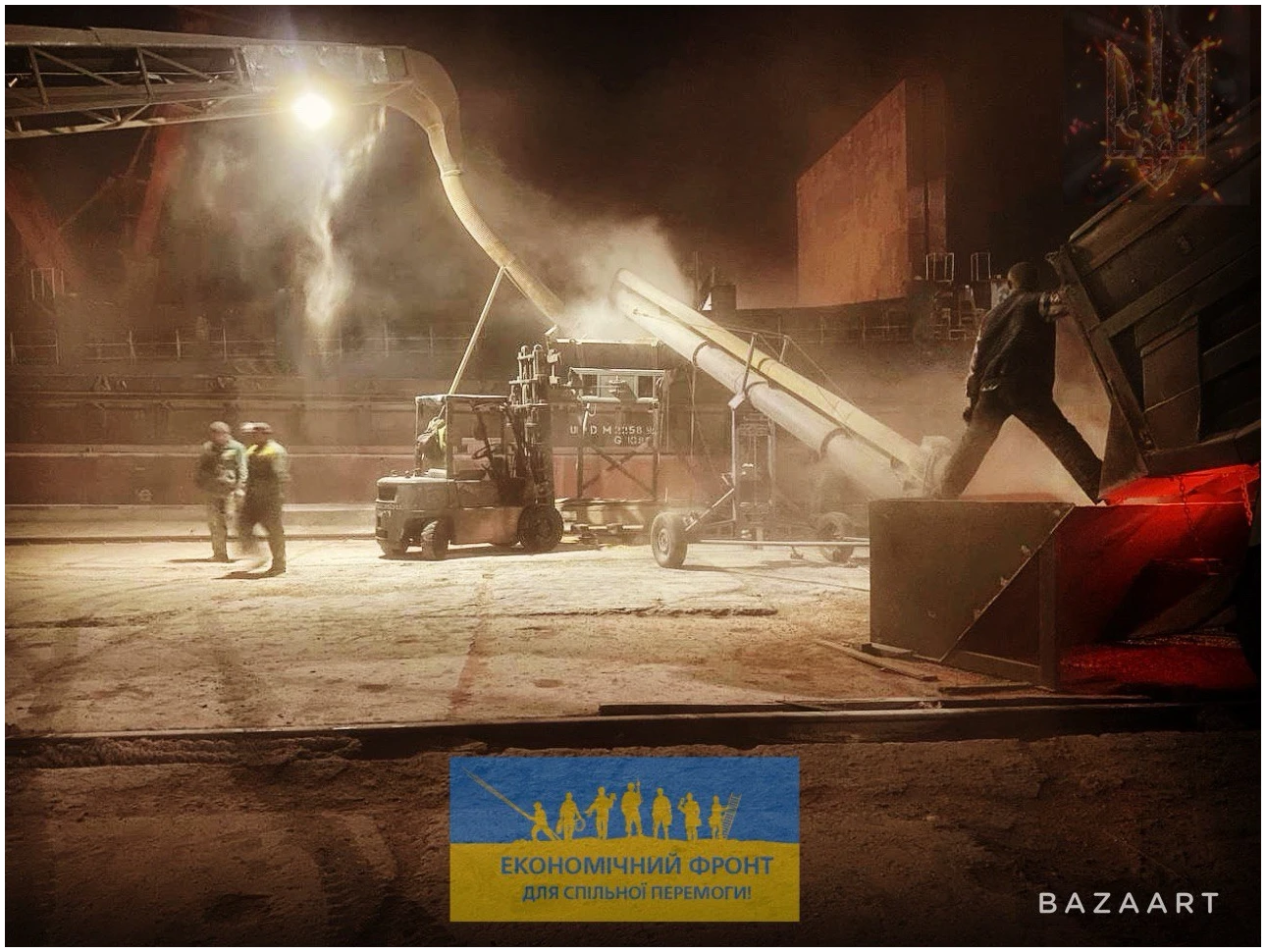
In July, 20% of Ukrainian grain and oilseed exports used the EU Solidarity Lanes while 80% moved by the Black Sea. How the routes complement the Danube.

In July 2026, the EU-Ukraine Solidarity Lanes carried around 20% of Ukrainian exports of grain, oilseeds and related products. Black Sea ports handled approximately 80%. The split shows that land and inland-waterway alternatives do not replace the sea in full, but remain a structural reserve.
Key figures for July
- 20% of grain, oilseed and related exports moved through the Solidarity Lanes;
- 80% of the same agricultural flow moved through Ukrainian Black Sea ports;
- 2.4 Mt of grain, oilseeds and related products were exported via the sea corridor in July;
- since May 2022, the Solidarity Lanes have enabled around 95 Mt of grain, oilseed and related exports.
The European Commission estimates that the Solidarity Lanes and Ukrainian Black Sea ports together carried around 255 Mt of grain, oilseeds and related products from May 2022. Across that longer period, their respective shares were about 40% and 60%.
Why the 20% share is strategically important
When the sea route operates reliably, it is generally more economical for large bulk cargoes. Rail, road, inland waterways and transshipment via neighbouring countries nevertheless distribute risk. For an exporter, this is not a once-and-for-all choice of one route but a portfolio of workable scenarios.
The Danube sits at the intersection of maritime and European logistics. Cargo can move toward the Black Sea or further into the European transport network. The EU destinations page explains how a port operation fits into the wider chain.
How to select a route for a specific cargo
- compare the full delivered cost, including transfers and waiting time;
- assess the acceptable delivery window and schedule-change risk;
- match cargo origin with the nearest available port or border crossing;
- confirm quality, documentation and phytosanitary requirements;
- retain a backup route until the cargo is physically dispatched.
Kiliya in a multimodal chain
For cargoes from southern Odesa region, grain transshipment at Kiliya Port can shorten the road leg to the water. The next stage depends on vessel particulars, navigation conditions and the destination market. This is why the route should be costed from farm to buyer, not only from the terminal gate.
The Solidarity Lanes do not compete with seaports; they provide an insurance and multimodal layer for Ukrainian exports.
Source: European Commission — DG MOVE
Need grain transshipment or storage?
Grain terminal in Kiliya on the Danube. We'll map out your export route.
Contact us