What a grain port terminal is, which operating zones it includes, and how grain moves from a truck or railcar into a vessel's hold.
A grain port terminal is much more than a warehouse beside a quay. It is a logistics hub connecting road or rail transport with river and sea shipping. A terminal receives and weighs each lot, tests it in a laboratory, cleans or stores it when required, assembles a vessel parcel and loads the cargo into the hold. Performance is measured not only in tonnes but also in preserved quality, accurate accounting and the time trucks and vessels spend waiting.
The main zones of a grain terminal
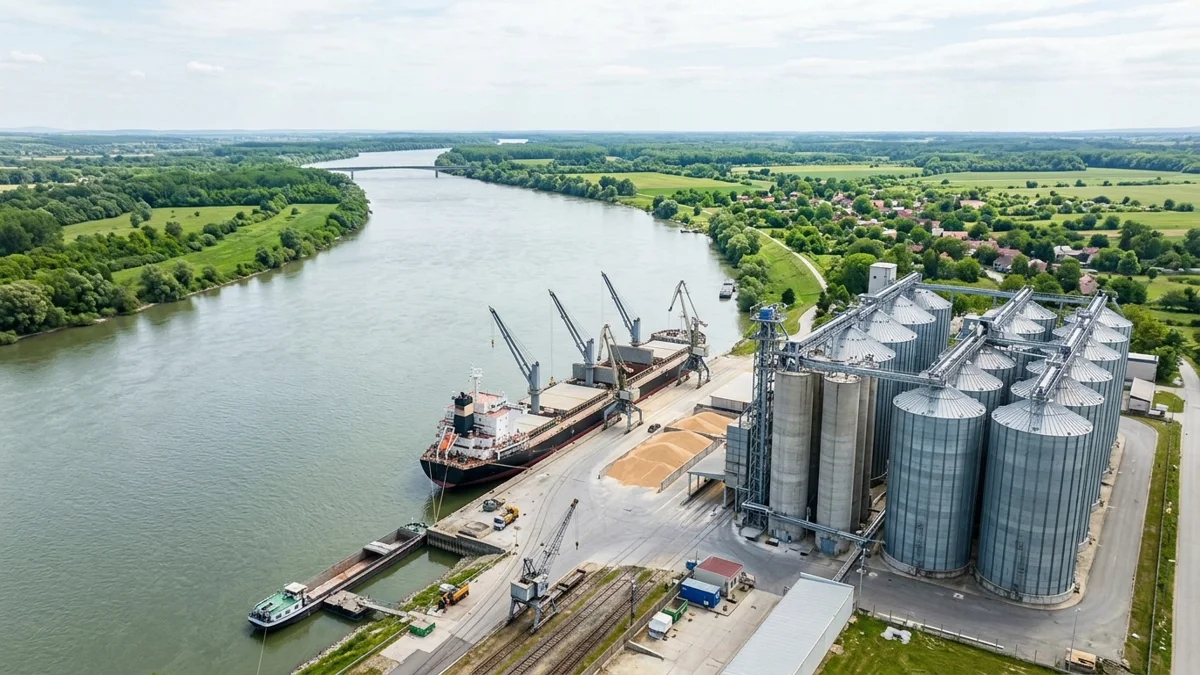
A typical flow starts at the gate and truck scales. It continues through sampling and laboratory points, intake pits, conveying equipment, warehouses or silos, and finally the berth. All these sections must operate as one system. If sampling or unloading cannot keep pace with arriving trucks, a queue grows even while the quay is free.
- Weighbridges record gross and tare weight to establish the quantity actually received.
- The laboratory checks moisture, foreign matter, test weight, protein and crop-specific contract parameters.
- The intake area unloads trucks safely and feeds the grain into the conveying system.
- Warehouses or silos segregate crops and quality grades until a shipment volume is assembled.
- The berth moves grain into vessel holds and records the quantity shipped.
From truck to vessel: the operating sequence
Before unloading, the terminal verifies the carrier and cargo details, weighs the truck and takes a representative sample. A lot that meets the agreed parameters enters the intake pit. The empty truck is weighed again after discharge, establishing the net weight and supporting the receiving documents.
Conveyors then move the grain to its assigned bin. Lots of different quality must not be mixed without control, because higher-value milling grain can lose its grade. Once the contractual volume has been assembled and the vessel is ready, the terminal sends grain to the berth and distributes it among the holds according to the loading plan.
Direct transshipment versus storage
In direct transshipment, cargo moves from trucks toward the vessel with minimal intermediate storage. It reduces handling but requires a precise truck schedule and an available berth. A storage-based flow is more flexible: the parcel can be accumulated over several days and loaded after the ship arrives. Storage and extra internal movements, however, become additional cost items.
The lowest handling rate is not always the cheapest route. Truck queues, vessel demurrage and excess storage can quickly outweigh a small difference in the per-tonne tariff.
How to evaluate a terminal
- Ask for the actual truck intake and vessel loading rates for your crop.
- Confirm which parameters the laboratory tests and how reference samples are handled.
- Check simultaneous storage capacity and whether quality lots can be segregated.
- Clarify berth limits: vessel draught and length, operating hours and weather restrictions.
- Request a complete calculation covering intake, storage, cleaning, drying, fumigation and loading.
Danube terminal or deep-water port?
Deep-water ports are designed for large ocean-going parcels, but may involve a longer inland haul and more complex port queues. A Danube terminal works with river-sea vessels and smaller parcels, allowing an exporter to assemble a shipment faster and plan flexible routes to Türkiye, Romania or an onward deep-water transshipment. The right comparison is always the total delivered logistics cost.
GTK operates in the Port of Kiliya, providing intake, storage and grain transshipment. To compare a route for a specific crop, volume and vessel, send the details through our contact page.
Need grain transshipment or storage?
Grain terminal in Kiliya on the Danube. We'll map out your export route.
Contact us