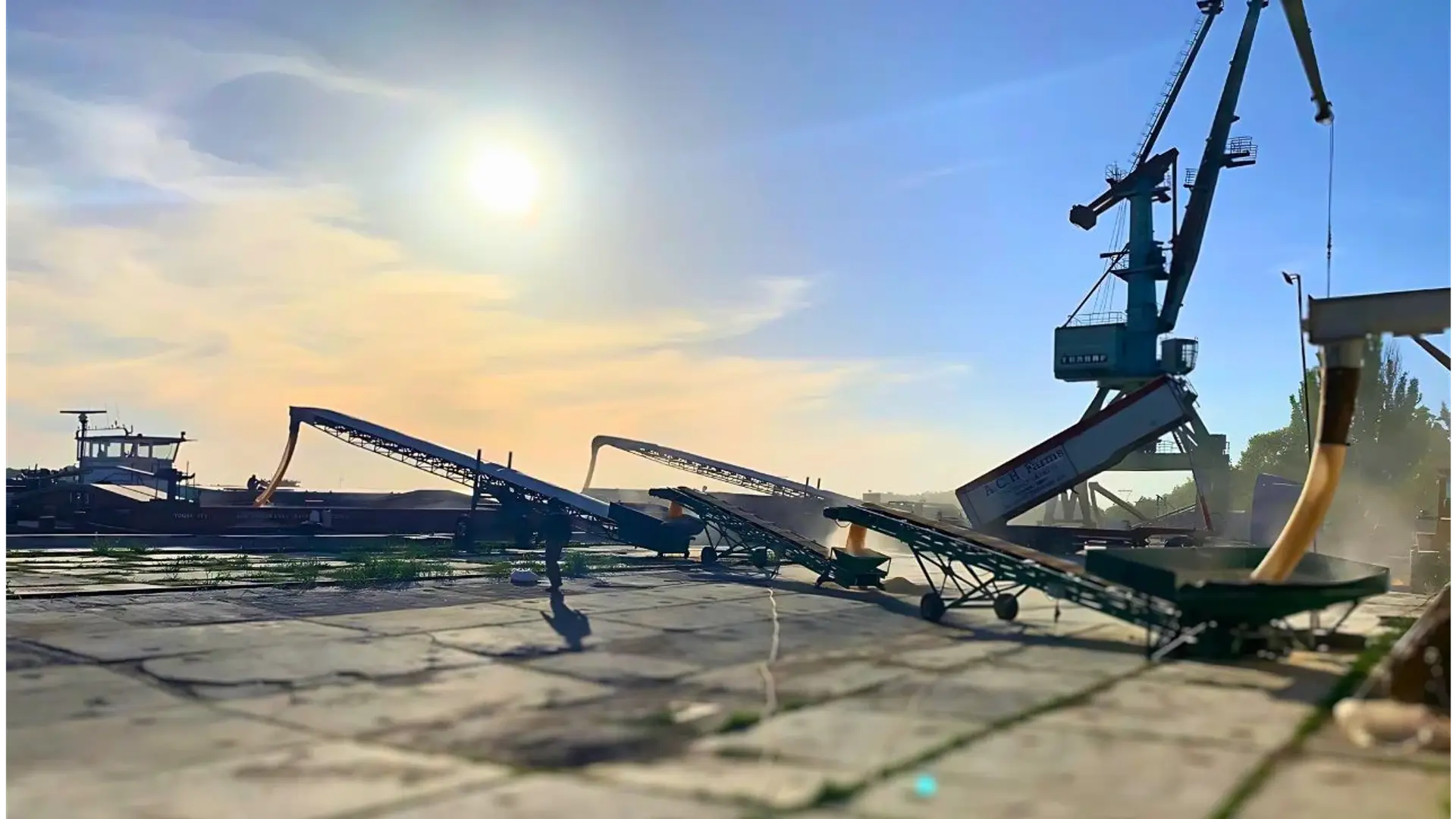
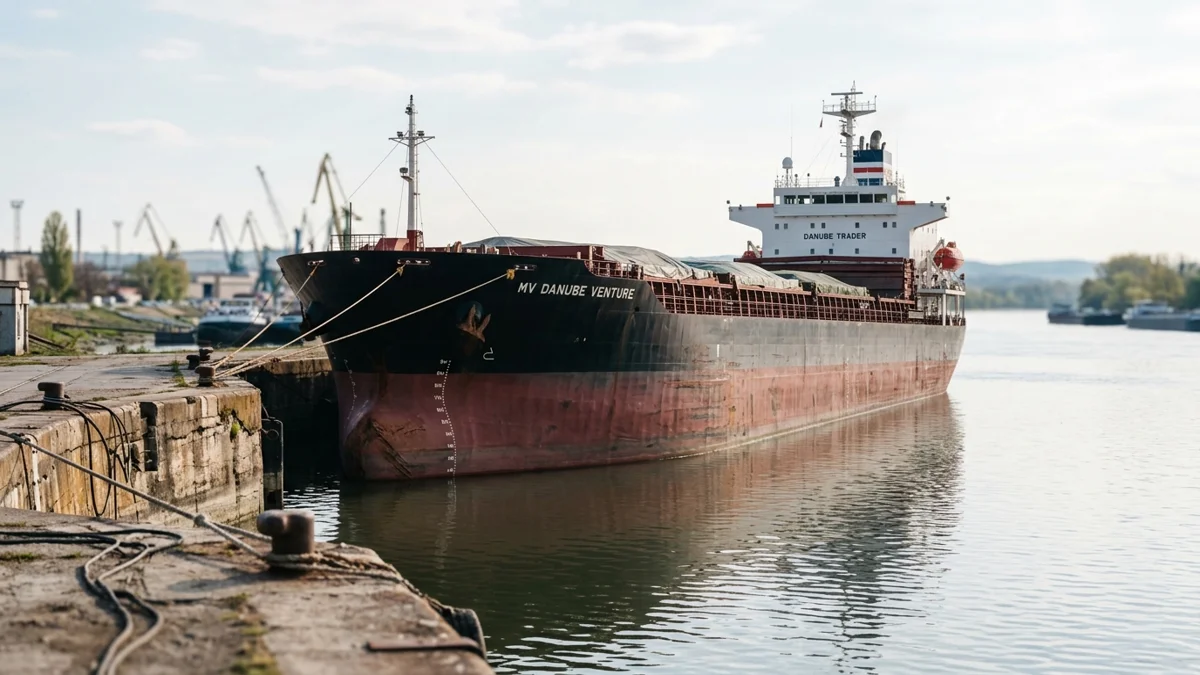
An overview of Ukraine's Danube grain ports — Kiliya, Izmail and Reni. How Danube grain export works, vessel draft limits, and where handling is most flexible.
When the deep-sea Black Sea ports faced blockade and logistical constraints, it was Ukraine's Danube ports that absorbed a major share of agricultural exports. The lower Danube turned into a strategic corridor through which grain from the country's south reaches global markets. This overview looks at three key hubs — the port of Kiliya, the port of Izmail and the port of Reni — their roles, draft limitations and place in river-sea logistics.
Why the Danube became a critical grain corridor
The Danube is Europe's second-longest river and a natural waterway linking Central Europe with the Black Sea. For Ukraine, its lower reaches offer access to the sea that does not depend on large deep-water harbours. When traditional routes are limited, Danube grain export keeps supply chains running: cargo moves by barge and small-tonnage vessels, is transhipped at the Danube ports, and continues by sea to buyers in Turkey, Egypt, Southern Europe and the Middle East.
The strength of the Danube route lies in its resilience. Deep-water harbours are vulnerable to pinpoint disruptions: problems at a single large terminal can stall a significant flow. The Danube, by contrast, operates as a network of several ports and dozens of berths, where cargo can be rerouted from one node to another. That is precisely why, during the hardest years for maritime logistics, the Danube ports moved millions of tonnes of Ukrainian agricultural output. For traders and farmers it meant one thing — grain kept moving toward the buyer even when the classic routes were under threat.
The Danube corridor is not a fallback option but a self-contained artery of Ukrainian agri-exports.
Three ports of the Ukrainian Danube
Port of Izmail
The port of Izmail is the largest of Ukraine's Danube ports by throughput. It is a multi-purpose hub with developed infrastructure for bulk cargo, including grain and ore. Located further upstream, Izmail is geared toward barges and river-sea vessels that form convoys for onward movement. Large volumes here come paired with heavier load on access roads and longer queues for handling.
Port of Reni
The port of Reni sits at the westernmost point of the Ukrainian Danube, near the border with Moldova and Romania. Historically it served as a transhipment point for transit cargo between the Danube and the overland routes of Central Europe. Reni's value lies precisely in its geography — it is the shortest leg for part of the cargo flow, although its distance from the main agricultural regions of the southern Odesa area adds inland transport for grain.
Port of Kiliya and Ust-Dunaisk
The port of Kiliya lies further downstream, closer to the Danube mouth, with the Ust-Dunaisk transhipment area working alongside it. This stretch has long been used to move cargo between river and sea vessels and back. Proximity to the sea and to the southern districts of Bessarabia makes Kiliya a convenient entry point for cargo from the south of the Odesa region — grain need not be hauled upstream, which shortens the inland leg. For many farms in the Kiliya, Bolhrad and neighbouring districts, it is the nearest access to the water, which means lower road-transport costs and a shorter path for each lot from the threshing floor to the vessel.
Draft, tonnage and the reality of vessel calls
The defining feature of the Danube is its draft limitation. Unlike deep-water sea harbours, river ports work mostly with small and mid-tonnage vessels and barges. This shapes the entire logistics scheme:
- Small-tonnage fleet — river-sea ships and barges instead of large bulkers, allowing flexible batching of lots;
- Grain transhipment in the lower reaches — accumulating lots and topping up larger vessels closer to the sea or at outer anchorages;
- Dependence on water levels — seasonal Danube fluctuations affect maximum draft and call planning;
- Speed over sheer volume — smaller ports often win on flexibility and turnaround time for smaller lots.
Where Kiliya fits in this picture
Each Danube port has its own niche. Izmail takes volume, Reni offers transit geography, and Kiliya wins where flexibility, small-tonnage handling and proximity to the southern Odesa region matter. For a farmer in southern Bessarabia, the short inland leg to Kiliya often means lower logistics costs and faster access to the water. The GTK terminal operates right here in Kiliya — an operator focused on grain storage and transhipment with an emphasis on small and mid-sized lots.
Choosing a port is always a trade-off between volume, timing and distance. For large, uniform lots, the powerful hubs upstream are the logical choice. But when cargo is assembled from several farms, needs separate storage by quality class, or must reach the water without week-long queues, the advantage shifts toward smaller, more agile terminals closer to the sea. Here the winner is the port that combines adequate infrastructure with a willingness to work to a client's specific schedule, rather than only to the calendar of large bulkers.
If your cargo is sourced in the southern Odesa region and you value flexible handling without an excessive inland leg, it is worth considering transhipment via Kiliya. The GTK team in the port of Kiliya can help match a scheme to your volume and timeline. Read more about Danube opportunities and grain logistics in the upcoming articles on this blog.
Need grain transshipment or storage?
Grain terminal in Kiliya on the Danube. We'll map out your export route.
Contact us