What vessel draft and deadweight mean, how port depth and seasonal Danube levels cap a grain lot's size, and why river navigation here relies on the river-sea fleet.
When it comes to grain export through the Danube ports, one technical term sits at the centre of almost every conversation — vessel draft. To anyone outside the industry it sounds abstract, yet draft and port depth often decide how many tonnes of grain you can actually load in a single ship call. This is not a minor logistics detail but the very factor traders build their entire schedule around. In this article we will explain, without the jargon, what draft and deadweight mean, how the Danube's water level dictates lot size, and why the port of Kiliya and neighbouring terminals rely on a special class of ships — river-sea vessels.
What draft and deadweight mean in plain terms
Draft is the depth to which a vessel sinks into the water: the distance from the waterline to the lowest point of the hull. The more cargo on board, the deeper the ship sits and the greater its draft. Deadweight (DWT) is the maximum mass a ship can take: cargo, fuel, ballast and supplies. The two are linked directly: loading grain increases the draft, and you can keep loading only as long as there is enough water under the keel. Once the draft approaches the depth of the channel, loading has to stop — even if the holds are not yet full.
A ship carries not as much as the hold can hold, but as much as the water under the keel allows.
Why the Danube's depth caps the lot size
The Danube is a river, and its port depth and channel depth are not fixed: they change from one stretch to another and from season to season. Unlike a deep-water sea harbour, where a large bulker can load to the brim, the river route puts a hard ceiling on draft. If a ship sits deeper than allowed, it simply will not pass the shallow stretches of the channel or risks running aground. So Danube navigation works on a principle: first you look at the available depth, then you calculate how many tonnes fit beneath it. This means the same grain lot that would leave Odesa on a single ship is often broken into smaller batches on the Danube.
The season matters as much as the port
- Spring high water and floods — levels rise, the permitted draft is greater, and you can load fuller.
- Summer and autumn low water — levels fall, the permitted draft shrinks, and the same ship takes less grain.
- Silting and sediment — the channel periodically needs dredging; without it the working depth gradually declines.
- Local bottlenecks — the shallowest stretch along the whole route sets the ceiling for the entire voyage, even if the rest of the river is deeper.
Why the Danube is the realm of the river-sea fleet
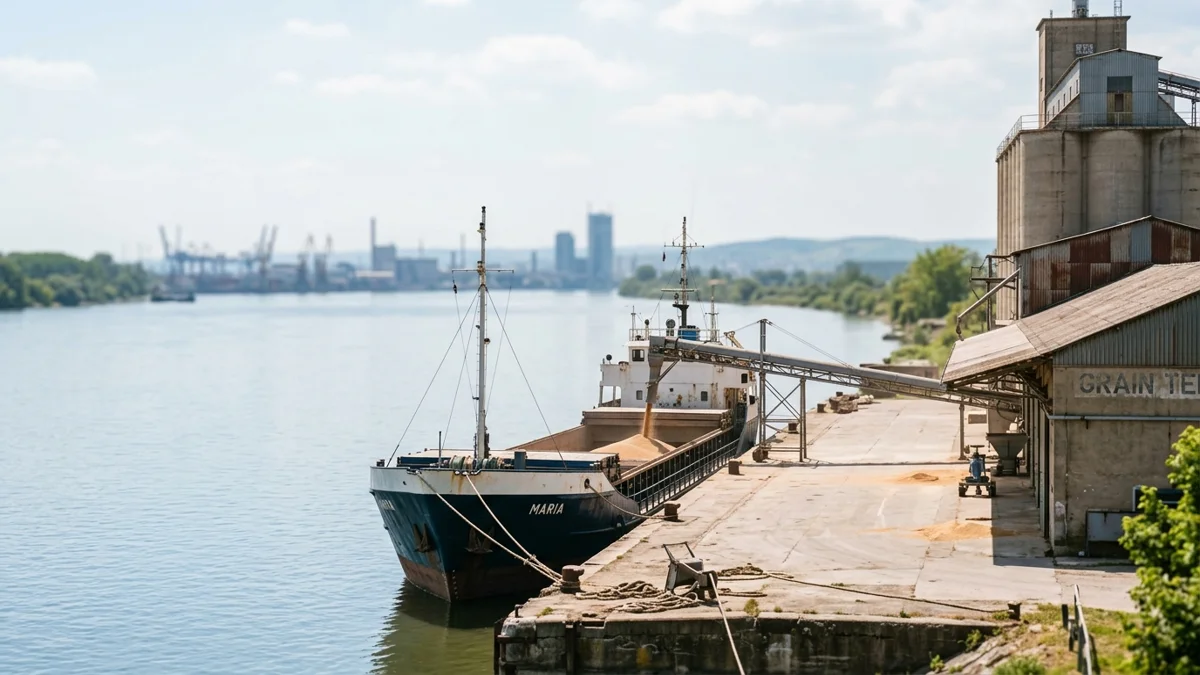
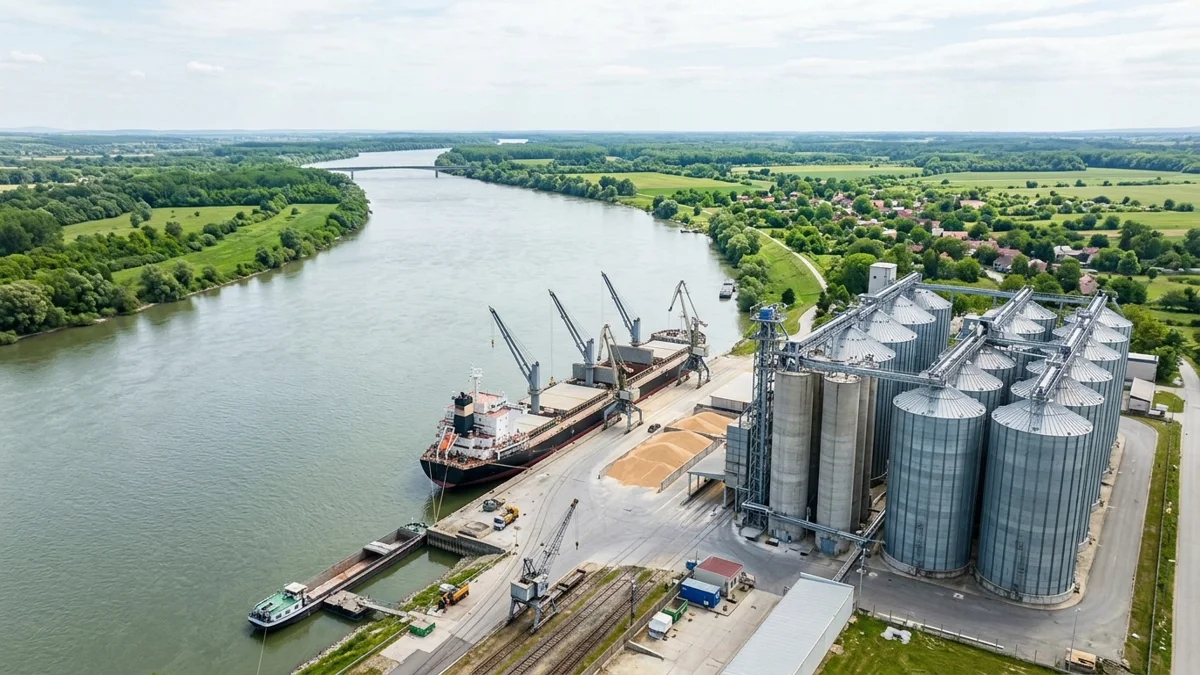
It is precisely because of the limited and changeable depth that Danube ports are geared not towards classic ocean bulkers but towards river-sea vessels. These are more compact ships with a shallower draft, able both to travel up the river and to head out into coastal seas. Their deadweight is more modest than a Panamax, but it is the shallower draft that makes them suitable where a deep-water ship physically could not pass. Grain from Danube terminals usually moves down the river to deep-water ports for transshipment into large bulkers, or directly to nearby markets. The smaller format is not a flaw but an adaptation to the very nature of the river route.
How exporters plan around draft
An experienced trader never plans a Danube shipment blind. Before forming a lot, they factor in the water-level forecast, the season, the current state of the channel and the class of available ships. From this follows the logic of smaller but more frequent lots: rather than freezing capital while waiting for one large bulker, grain is shipped in smaller batches as soon as it is ready, with the size tuned to the real draft. This disciplines the entire chain — from the truck-intake schedule to contract deadlines. Whoever understands the link between draft, depth and season gains predictability; whoever ignores it risks idle time and broken deadlines.
GTK operates in the port of Kiliya within exactly this frame of reference — where the river-sea fleet and the Danube channel set the rhythm of the work. For an exporter it means one thing: a partner who understands draft, seasonality and deadweight from practice rather than a textbook helps build a realistic shipment schedule. The specific working depths and ship parameters always depend on current hydrology and are agreed for each voyage individually — there are no universal figures here, and that is exactly why planning matters more than promises.
Need grain transshipment or storage?
Grain terminal in Kiliya on the Danube. We'll map out your export route.
Contact us