An objective comparison of the ports of Kiliya and Odesa for grain transshipment: logistics, vessel size, queues, trucking cost and flexibility for smaller lots.
When an exporter in the south of the Odesa region or in Bessarabia plans to ship a harvest, one simple but important question comes up: where do you send the grain? The two obvious routes are the port of Kiliya on the Danube and the deep-water harbour of Odesa. Both options work, but the economics of each differ sharply depending on where you haul from, how large your shipments are and how flexible your schedule is. This article is an honest attempt to weigh both sides: not "Kiliya is always better", but when and for whom each port genuinely makes sense. Spoiler: for many farms in the south of the region, the answer is not as obvious as it first appears.
Logistics: distance matters more than you think
The first and heaviest factor is the trucking leg. For a farm in the Kiliya, Izmail or Bolhrad districts, grain transshipment in Kiliya means a 30–80 km haul. The same grain to Odesa means 150–250 km. The difference in transport cost adds up fast on every tonne, especially when diesel is expensive and the lot is large. Trucking is not only fuel, though: it is wear on equipment, driver pay, time on the road and the risk of idle hours. A short leg to the port of Kiliya often lets one truck make two or three runs a day where Odesa allows only one. Over a full season that turns into dozens of saved trips and freed-up vehicles — a direct, measurable gain for the southern districts.
Grain dislikes long roads: every extra kilometre of trucking eats into the exporter's margin.
Vessel size: deep-water Odesa versus river-sea Handysize
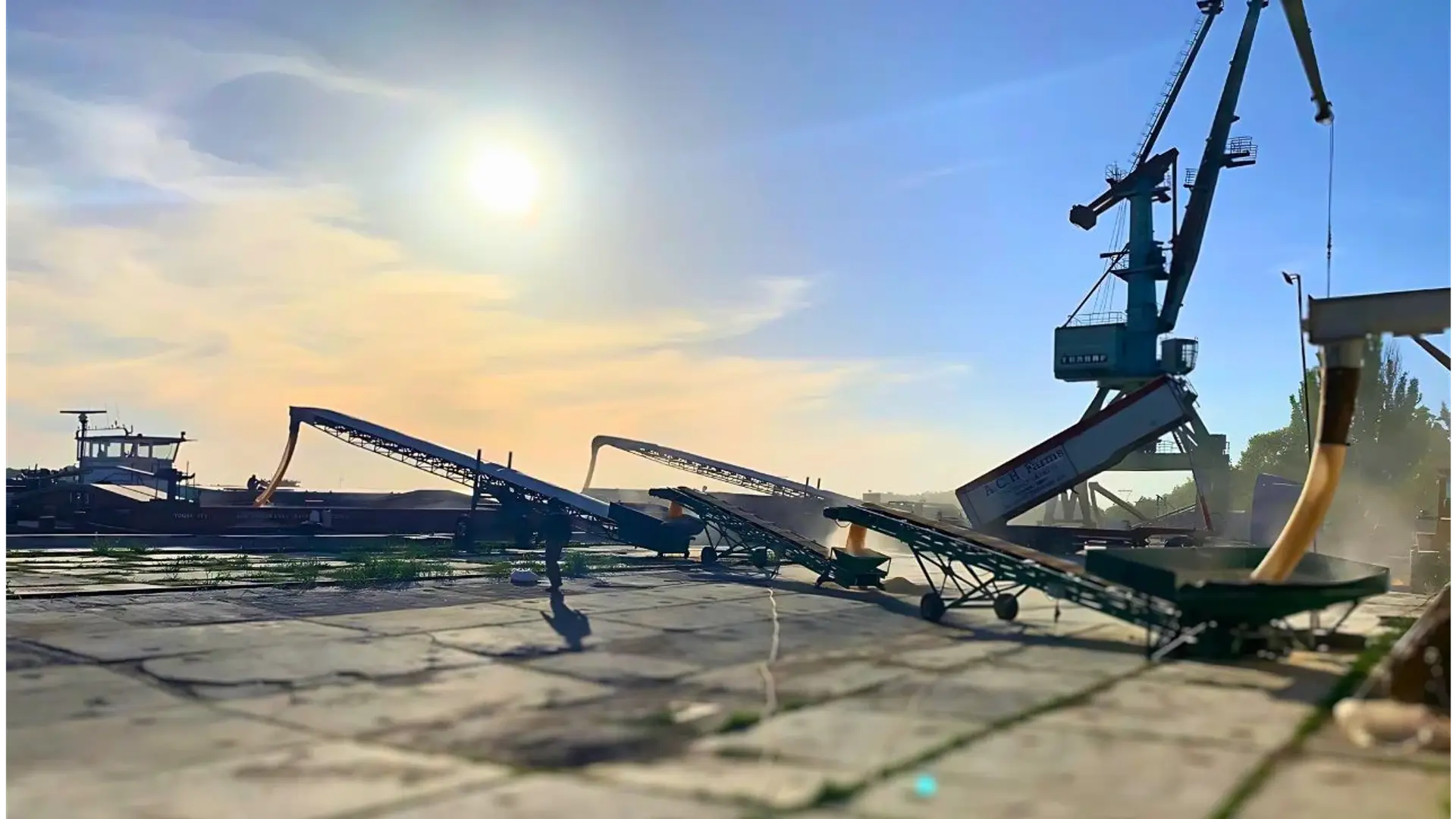
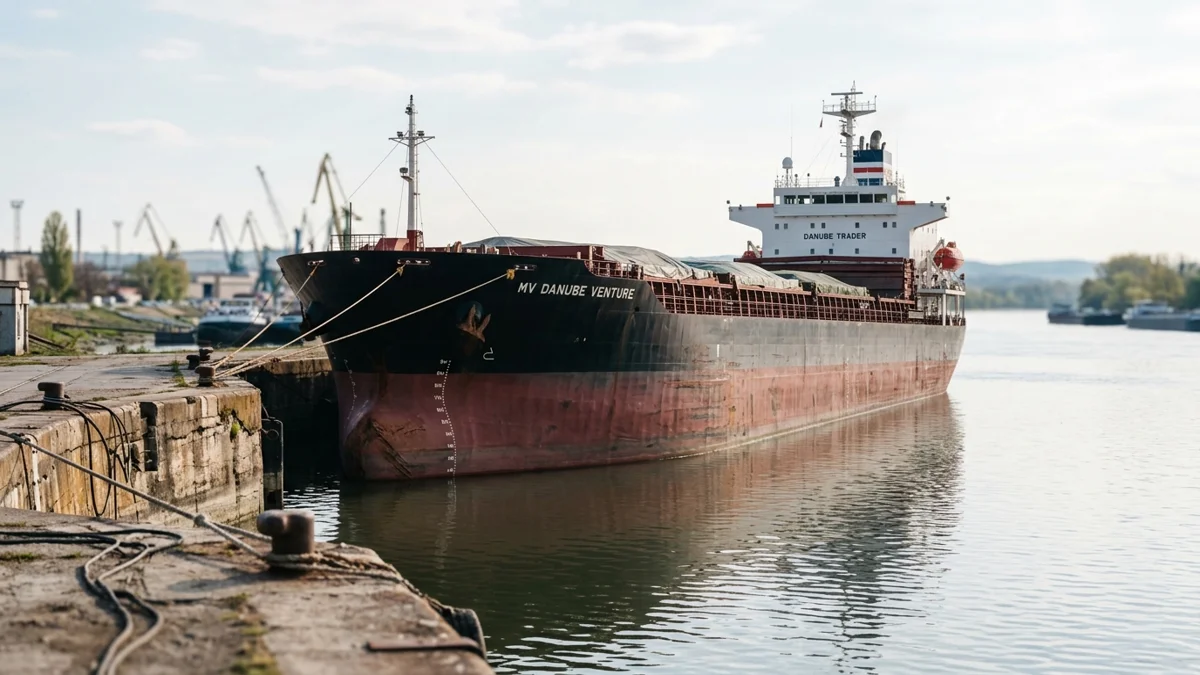
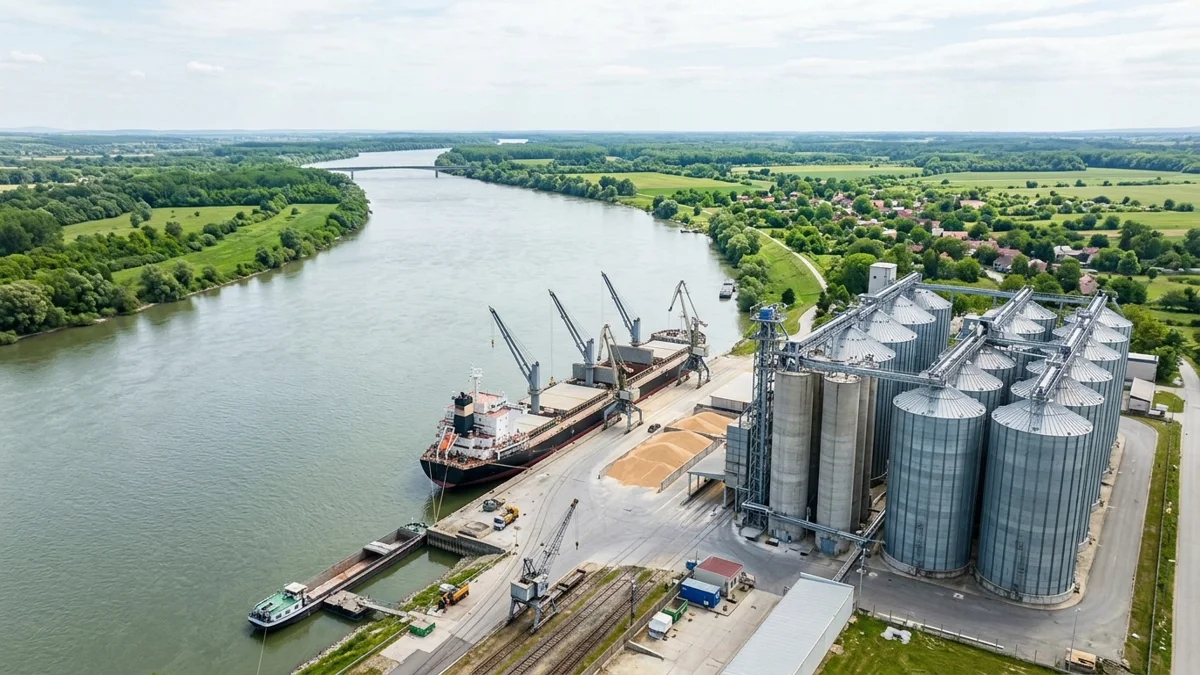
Here the advantage tips the other way. The port of Odesa is a deep-water harbour able to take large Panamax and even bigger ships that load tens of thousands of tonnes in a single call. If you are building a large vessel lot of 50,000–60,000 tonnes for direct export to, say, North Africa or Asia, Odesa delivers savings on ocean freight through sheer scale — and that is its objective strength. Kiliya works differently. It is a river-sea port on the Danube, geared towards smaller vessels and river-sea barges. From here grain usually moves down the Danube to the deep-water Romanian ports (Constanța, Sulina) for transshipment, or directly to nearby markets. The ship is smaller — but that smaller format is exactly what gives the flexibility the big terminals lack.
Why smaller sometimes means better
- Small and medium lots — no need to wait until 50,000 tonnes pile up for a single ship; shipping is possible in smaller batches as soon as the grain is ready.
- Less frozen capital — grain does not sit in storage for weeks waiting for a large bulker, and cash returns to circulation faster.
- Access to the Danube corridor — a steady route to the EU and beyond, relatively independent of the open-sea situation.
- Working with mixed crops — some wheat, a separate batch of corn, a lot of barley or rapeseed: smaller lots here are the norm, not a problem.
Queues, turnaround and idle time
In peak export months, large deep-water terminals run at the edge of their capacity. That means ships queuing at anchorage, waiting for truck-discharge slots and unpredictable turnaround. For a trader, idle time is not an abstraction but real demurrage costs and a broken delivery schedule. Smaller Danube terminals, including the facilities at Kiliya, generally offer faster truck turnaround and a clearer intake schedule. The smaller scale works in favour of predictability here: you know when your trucks will unload and you plan your logistics without the extra stress. And when grain export comes with tight contract deadlines, predictability is often worth more than the headline transshipment rate.
So what do you choose?
There is no universal answer — there is your specific geography, volume and timing. If you are building a large vessel lot of tens of thousands of tonnes and your grain already gravitates towards Odesa geographically, the deep-water port will be the rational choice thanks to ocean freight. Here Odesa is genuinely strong, and that is worth acknowledging without reservation. But if you farm in the south of the Odesa region or in Bessarabia, ship medium lots and value a short trucking leg, fast turnaround and predictability, a port terminal in Kiliya more often turns out to be the rational decision. The savings on logistics and the flexibility frequently outweigh the gains from a large vessel's scale, especially for farms that do not move tens of thousands of tonnes at a time. The practical approach is simple: take your real distance to each port, multiply by the carrier's rate, add expected idle time — and compare it against the difference in ocean freight. For many southern farms the arithmetic speaks for itself.
GTK operates in the port of Kiliya and is built for exactly this scenario — grain transshipment for exporters in the southern region who value proximity, speed and working with real volumes rather than bulker-only lots. We are not claiming the Danube suits everyone: for deep-water mega-lots, Odesa remains the logical choice. But if your grain is already nearby, run the numbers on both routes honestly, with every hidden trucking and idle-time cost included. The Danube often wins by a clear margin.
Need grain transshipment or storage?
Grain terminal in Kiliya on the Danube. We'll map out your export route.
Contact us