Incoterms for the grain trader without the theory: EXW, FCA, CPT, FOB, CFR, CIF — who pays what, where risk passes, and which terms are typical for Black Sea and Danube grain.
If you have ever read a grain contract, you have seen three cryptic letters next to a port name: FOB, CIF, CPT. These are Incoterms — international rules that use one short term to describe who pays for transport, insurance and customs up to a given point, and, most importantly, exactly where the risk for the cargo passes from seller to buyer. Learning them is not an academic exercise: a mistake in the delivery term can cost you thousands of dollars in demurrage or insurance. This article is a quick, practical guide for the grain trader, with no legal padding.
What Incoterms are and why they matter
Incoterms (International Commercial Terms) are a set of standard trade terms published by the International Chamber of Commerce. The current edition is Incoterms 2020. Each term answers two key questions: who bears the cost on every leg of the route, and at what point the risk of accidental loss or damage to the cargo passes. These are different things: a seller may pay freight all the way to the destination port yet hand over the risk to the buyer back at loading. That is why the delivery basis is not a detail of wording but the foundation of a deal's entire economics.
The six terms a grain trader actually needs
Incoterms 2020 has eleven terms in total, but for grain export by sea and river, six do the real work in practice. Let us walk through each — from the most favourable for the seller to the one where the seller takes on the most.
- EXW (Ex Works) — the seller simply makes the grain available at their warehouse or elevator. Everything else — loading, transport, export clearance, freight — is on the buyer. Minimum obligation for the seller, but also the weakest price.
- FCA (Free Carrier) — the seller hands the grain to the buyer's carrier at an agreed place (warehouse, terminal), already cleared for export. Risk passes at that moment. A convenient, flexible term that often replaces the dated FOB for containers and trucking.
- CPT (Carriage Paid To) — the seller pays delivery to the named destination, but risk passes to the buyer the moment the goods are handed to the first carrier. So the seller pays, while the buyer carries the risk from dispatch onward.
- FOB (Free On Board) — the classic of seaborne grain trade. The seller delivers and loads the grain on board the vessel at the port of shipment; from that point the risk and onward costs are the buyer's. The buyer charters the ship themselves.
- CFR (Cost and Freight) — the seller pays delivery and ocean freight to the destination port, but risk passes to the buyer already at loading onto the vessel. Insurance is the buyer's concern.
- CIF (Cost, Insurance and Freight) — the same as CFR, plus the seller is obliged to pay for cargo insurance during transit. The heaviest obligation for the seller among the popular sea terms.
Remember the golden rule: "where the risk passes" and "who pays the freight" are two different questions, and they do not always coincide.
FOB or CIF: the practical difference
Picture a simple deal: a wheat lot is sold from a Black Sea or Danube port to a buyer in Turkey. On FOB terms the seller is responsible for the grain only up to the ship's rail — beyond that the buyer arranges the freight, the insurance and carries the risk at sea. The FOB price is lower, but the seller also has less logistics hassle. On CIF terms the seller takes on freight and insurance all the way to the destination port; the CIF price is naturally higher by the amount of those costs. CIF suits the buyer because they get a "turnkey" cargo and one clear figure in the contract. For the seller, CIF means more control over the chain and often a better margin, if they can charter a vessel favourably. The choice between FOB and CIF usually comes down to which of the two parties has better access to shipping and is willing to carry the risk.
Which terms are typical for the Black Sea and the Danube
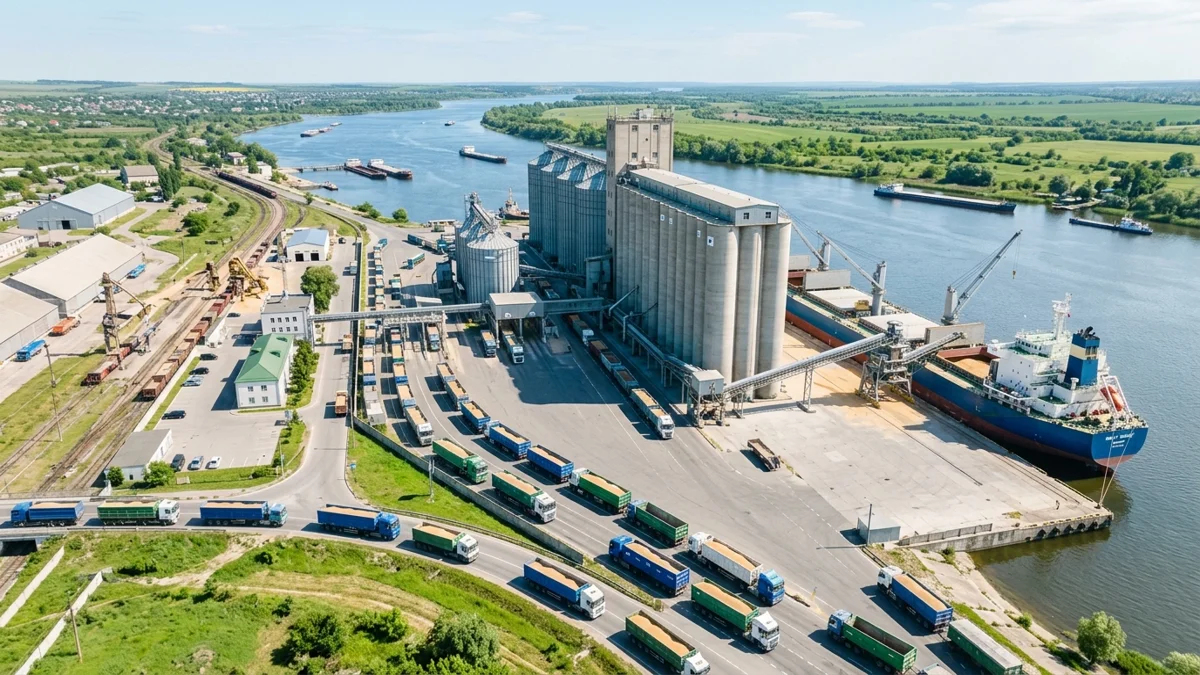
Black Sea grain trade has historically been dominated by FOB and CIF — the language that traders speak on the exchange and in long-term contracts. For deep-water ports such as Odesa or Constanța, large vessel lots often move on exactly these terms. On the Danube, where smaller river-sea ships operate and where part of the logistics is transshipment from trucks or barges, FCA and CPT are used more and more: they are more flexible for multimodal routes and not rigidly tied to the "ship's rail", which makes sense for a river corridor. If your grain passes through a Danube terminal with onward transshipment at the deep-water Romanian ports, do not be surprised to see an FCA-terminal term in the contract instead of the usual FOB-port.
A practical tip on choosing
Before agreeing to a term, ask yourself three questions: do I have access to cheap freight; which of us can insure the cargo better; and where do I want my responsibility for the grain to end. If you are a small exporter without your own shipping leg, FOB or FCA take the extra burden off you. If you control the logistics and want to sell a "turnkey" cargo, CIF gives you a better price and more control. And always state the edition: write "Incoterms 2020" to avoid misreadings against older versions of the rules.
Understanding Incoterms is basic literacy for an exporter: the right term saves money before the grain even heads to port. And when it comes to the physical transshipment on the Danube, GTK in the port of Kiliya works with different delivery bases and helps build the route so that your contract — whether FOB, FCA or CIF — is fulfilled without extra idle time or surprises.
Need grain transshipment or storage?
Grain terminal in Kiliya on the Danube. We'll map out your export route.
Contact us