A full breakdown of grain export routes from Ukraine in 2026: deep-sea ports, the Danube ports, rail to the EU and road. Pros, cons and when each one wins.
Over the past few years, the question "how do you export grain from Ukraine?" has shifted from routine logistics to a strategic decision that directly shapes a farm's margin. There are several routes today, and none is universally "the best" — each wins under its own conditions. This article is a practical guide to every real channel for exporting grain from Ukraine in 2026: from the deep-water Black Sea ports to the rail crossings on the EU border. We will weigh the pros and cons of each option and show honestly who it makes sense for, and when.
Deep-water Black Sea ports
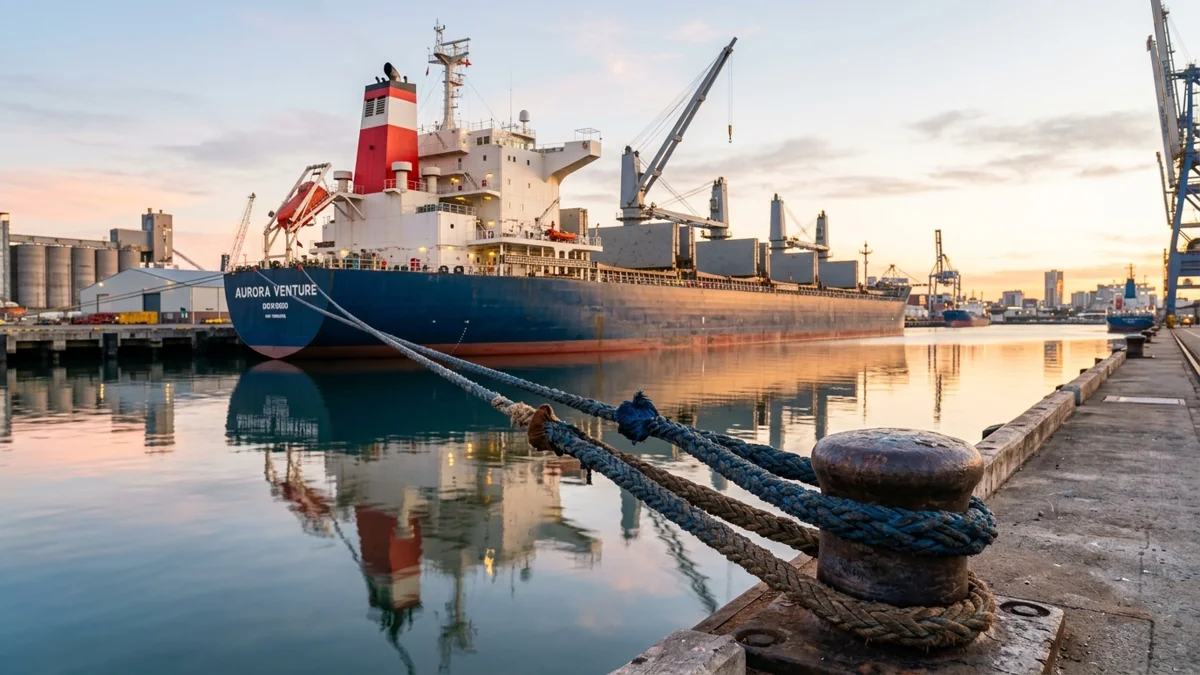
The big Black Sea triangle — Odesa, Chornomorsk and Pivdennyi — is the historic backbone of Ukraine's grain export. This is where the largest volumes converge, and where Panamax and Capesize ships depart loaded with tens of thousands of tonnes per call. Thanks to the grain corridor, these ports again handle large bulkers bound for distant markets — North Africa, the Middle East, Southeast Asia.
- Pro: the lowest ocean freight per tonne through sheer vessel scale — critical for distant markets.
- Pro: direct vessel lots of 50,000–60,000 tonnes with no transshipment at intermediate ports.
- Con: a long trucking leg for southern and western regions, plus ship queues at anchorage in peak season.
- Con: sensitivity to the open-sea security situation and to insurance rates.
Deep-water ports are the rational choice when you are building a large vessel lot and already gravitate towards central Odesa geographically. For long-haul export, scale here outweighs everything.
The Danube ports — a flexible river-sea corridor
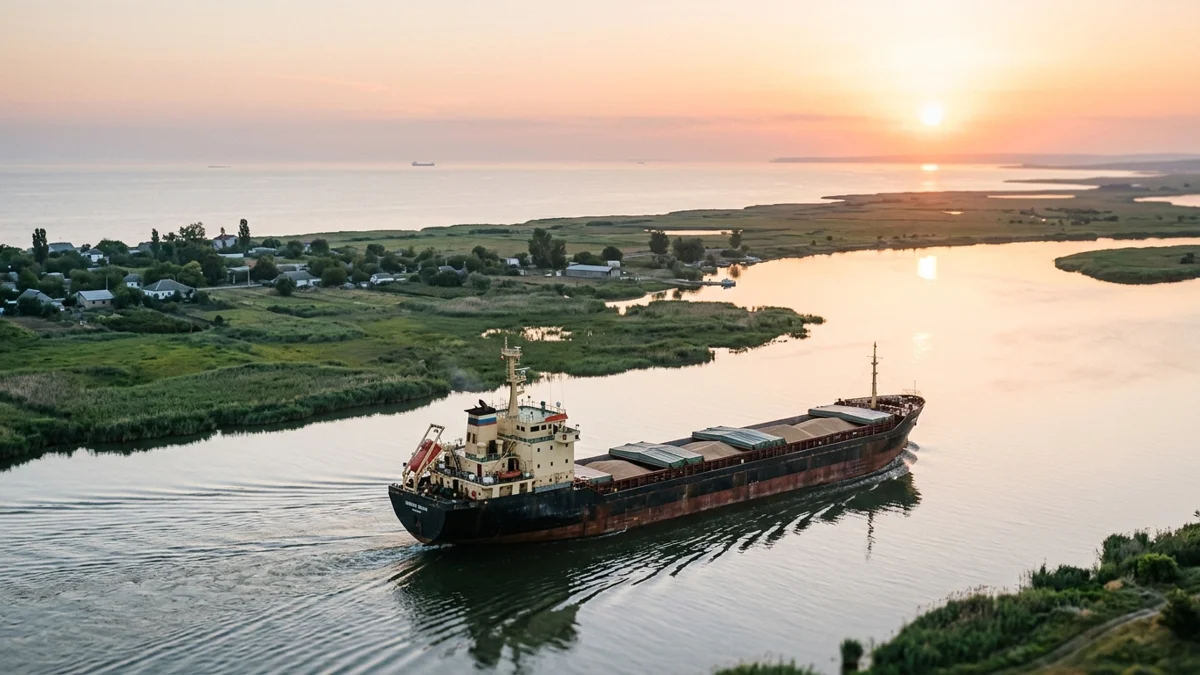
The Danube ports — Kiliya, Izmail and Reni — have grown over recent years from a backup channel into a full export artery. Located in the Danube delta, they work with smaller vessels and river-sea barges: grain moves down the river to the deep-water Romanian ports (Constanța, Sulina) for transshipment, or directly to nearby markets. This is the case where a smaller format becomes an advantage rather than a limitation.
Why the Danube became a key route
- Lot flexibility — no need to wait for a full deep-water ship to fill; shipping is possible in smaller batches.
- A short trucking leg for farms in the south of the Odesa region and Bessarabia — 30–80 km instead of 150–250 km to Odesa.
- Fast truck turnaround and a clearer intake schedule at smaller terminals.
- Relative independence from the open-sea situation — part of the route runs through a sheltered inland river corridor.
The Danube gave Ukrainian grain what the deep-water ports lacked — flexibility and a short haul for the south.
Among the Danube ports, Kiliya holds a distinct niche: it is geared towards flexible transshipment of small and medium lots with a short trucking leg for the southern districts. For a farm in the Kiliya, Izmail or Bolhrad area, this is often the shortest and most predictable way to move grain out — without long roads and without waiting for a large bulker.
Rail to the EU borders
The rail route means export via land crossings on the border with Poland, Slovakia, Hungary and Romania, as well as to Baltic and Adriatic ports. This grain corridor was a lifeline during the blockade of sea lanes, but it carries structural limits.
- Pro: full independence from the sea — grain travels overland to European buyers and ports.
- Pro: access to the EU internal market with no maritime transshipment.
- Con: the gauge break at the border requires reloading or bogie changes — that is time and money.
- Con: limited crossing capacity and a higher cost per tonne-kilometre than on water.
Rail makes most sense for the western regions and for supplying the EU directly, where ocean freight is no longer needed. For southern farms it rarely competes with the nearby Danube ports on cost.
Road: flexibility for short hauls
Direct trucking to the EU border or to the nearest port is the most flexible, but also the most expensive way over long distances. The truck is irreplaceable on the "last mile" — from field to elevator or port terminal — and works well for small, urgent lots. But over a long leg the economics of road quickly lose to both rail and water: fuel, equipment wear and driver pay add up on every tonne. So road is almost always part of a wider chain rather than a standalone export route.
So which route do you choose?
There is no universal answer — there is your geography, volume and timing. For long-haul export in large lots, deep-water ports win on freight. For supplying the EU overland, rail wins. And for farms in the south of the Odesa region and Bessarabia that value a short haul, fast turnaround and the flexibility of small lots, the Danube ports, led by Kiliya, more often turn out to be the most rational solution. The practical approach is simple: take your real distance to each point, multiply by the rate, add expected idle time — and compare against the difference in freight.
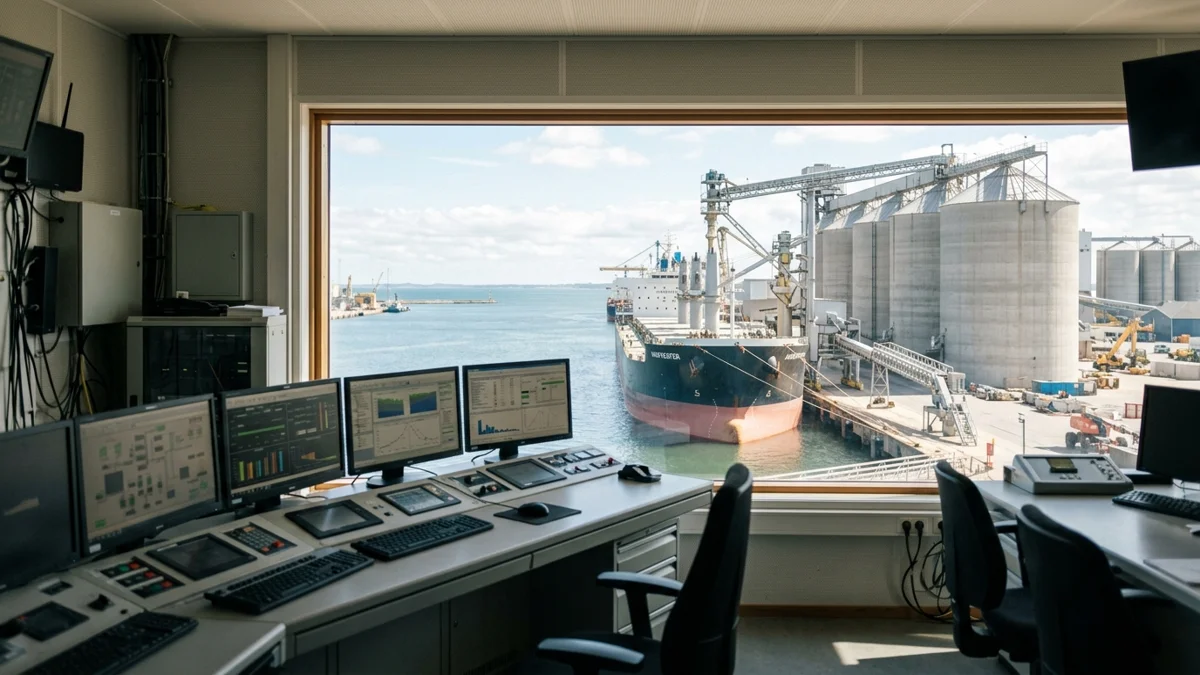
GTK operates in the port of Kiliya and is built for exactly this scenario — flexible grain transshipment for exporters in the southern region who value proximity, speed and working with real volumes. We are not claiming the Danube suits everyone: for deep-water mega-lots, the large Black Sea ports remain the logical choice. But if your grain is already nearby, run the numbers on every route honestly, with the hidden trucking and idle-time costs included. The Danube often wins by a clear margin.
Need grain transshipment or storage?
Grain terminal in Kiliya on the Danube. We'll map out your export route.
Contact us