Which documents you need to export grain from Ukraine: contract, invoice, phytosanitary certificate, certificate of origin, quality certificates and customs clearance.
A first export contract is rarely frightening because of prices or logistics — it is the paperwork that intimidates. It seems there are endless documents, each issued by a different authority, and a single mistake in one line could stop a vessel. In reality, the set of documents for grain export from Ukraine is finite and repeatable: once you understand the logic, you will walk this path almost automatically. This article is a practical checklist — exactly what you need, what each document is for and who issues it. No legal fluff, just the essentials.
Commercial documents: the foundation of the deal
Everything starts with the papers that record the agreement between seller and buyer. Without them the other certificates have nothing to attach to — both customs and the bank work from this commercial base.
- Export contract — the core document of the deal. It defines the goods, volume, price, the Incoterms delivery basis (FOB, CPT, FCA and so on), the currency and payment terms. Signed by both parties; every other document refers back to it.
- Commercial invoice — the bill for a specific shipment: crop name, weight, price per tonne, total amount. Prepared by the seller (exporter). The customs value is calculated from it.
- Packing list / specification — the breakdown of the lot: quantity, packaging type (in bulk or in big bags), vehicle numbers. Drawn up by the exporter.
Quality and quantity certificates
The buyer abroad cannot see your grain — they trust the figures in the certificates. That is why independent assessment of quality and weight is critical and is often written directly into the contract.
- Quality certificate — records the parameters: moisture, test weight, protein content, vitreousness, impurities. Issued by an accredited laboratory or an independent surveyor (SGS, Bureau Veritas, Cotecna and similar).
- Quantity (weight) certificate — confirms the actual weight of the shipped grain. Issued by the same independent surveyor during loading onto the vessel.
- Fumigation certificate — confirms treatment of the holds or the grain against pests. Often required by importing markets; issued by a certified fumigation service.
Why an independent surveyor rather than your own lab
The buyer wants a neutral party with no stake in the outcome. Surveyors such as SGS act as an arbiter: their certificate is accepted by banks under letters of credit and serves as the basis for final settlement. This protects both sides — the exporter from baseless claims and the buyer from short loading or hidden defects.
State permit documents
This is the part where government bodies are involved, and it is where newcomers worry most. In practice the procedure is well established and predictable.
- Phytosanitary certificate — a mandatory document for plant products. It confirms that the grain is free of quarantine pests and diseases. Issued by the State Service for Food Safety after sampling and laboratory analysis. Without it the grain will not be cleared at the importing country's border.
- Certificate of origin — confirms that the grain was grown in Ukraine. Required for customs preferences and tariffs in the destination country. Issued by the Ukrainian Chamber of Commerce and Industry.
- Declaration of conformity / safety certificate — required by certain markets (the EU, the Middle East) to confirm the grain meets sanitary norms for mycotoxins, pesticides and heavy metals.
Customs and transport documents
The final block is completed during the actual shipment. This is where the grain officially crosses the border and passes into the carrier's responsibility.
- Customs declaration — the main document of customs clearance. Filed with customs through a declarant or customs broker; the goods are released for export on its basis. It contains the HS commodity code, the value and the delivery basis.
- Bill of Lading — the sea waybill. It confirms acceptance of the cargo on board and is a document of title to the goods. Issued by the carrier (the shipping line or its agent) after loading.
- Port quality certificate / warehouse receipt — confirms receipt of the grain at the terminal and its condition at the moment of transshipment.
How not to get lost in the paperwork
The main rule: documents are not handled one by one at the end — they run in parallel with preparing the shipment. The phytosanitary certificate is ordered in advance, the surveyor is called in for loading, the broker prepares the declaration before the trucks even arrive. The most common rookie mistake is discrepancies between documents: the weight on the invoice does not match the bill of lading, or the crop is described differently in the contract than in the phytosanitary certificate. Customs spots such things immediately, and it costs days of delay.
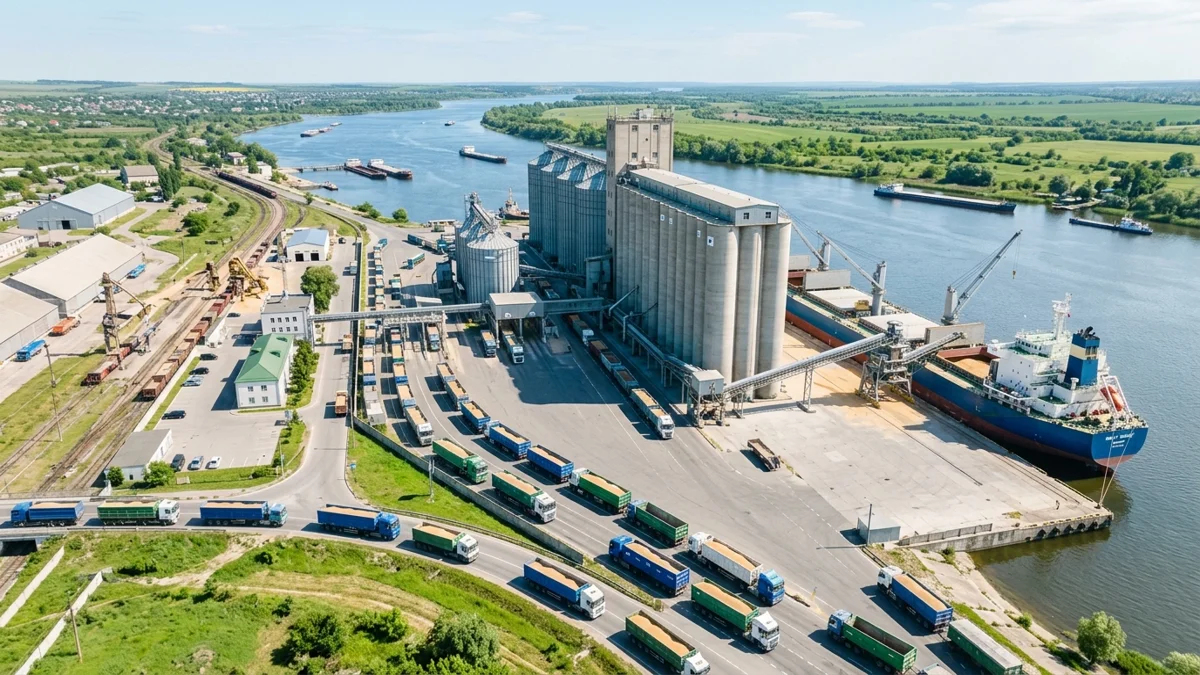
That is why experienced exporters do not carry it all alone. GTK operates in the port of Kiliya on the Ukrainian Danube and helps clients through this path: coordination with the customs broker, calling in the surveyor, warehouse documentation and reconciling the data across the papers. Your job is to grow quality grain and find a buyer; the rest of the logistics-and-document chain can realistically be built so that the vessel sails on time and the lot clears the border without extra questions.
Need grain transshipment or storage?
Grain terminal in Kiliya on the Danube. We'll map out your export route.
Contact us