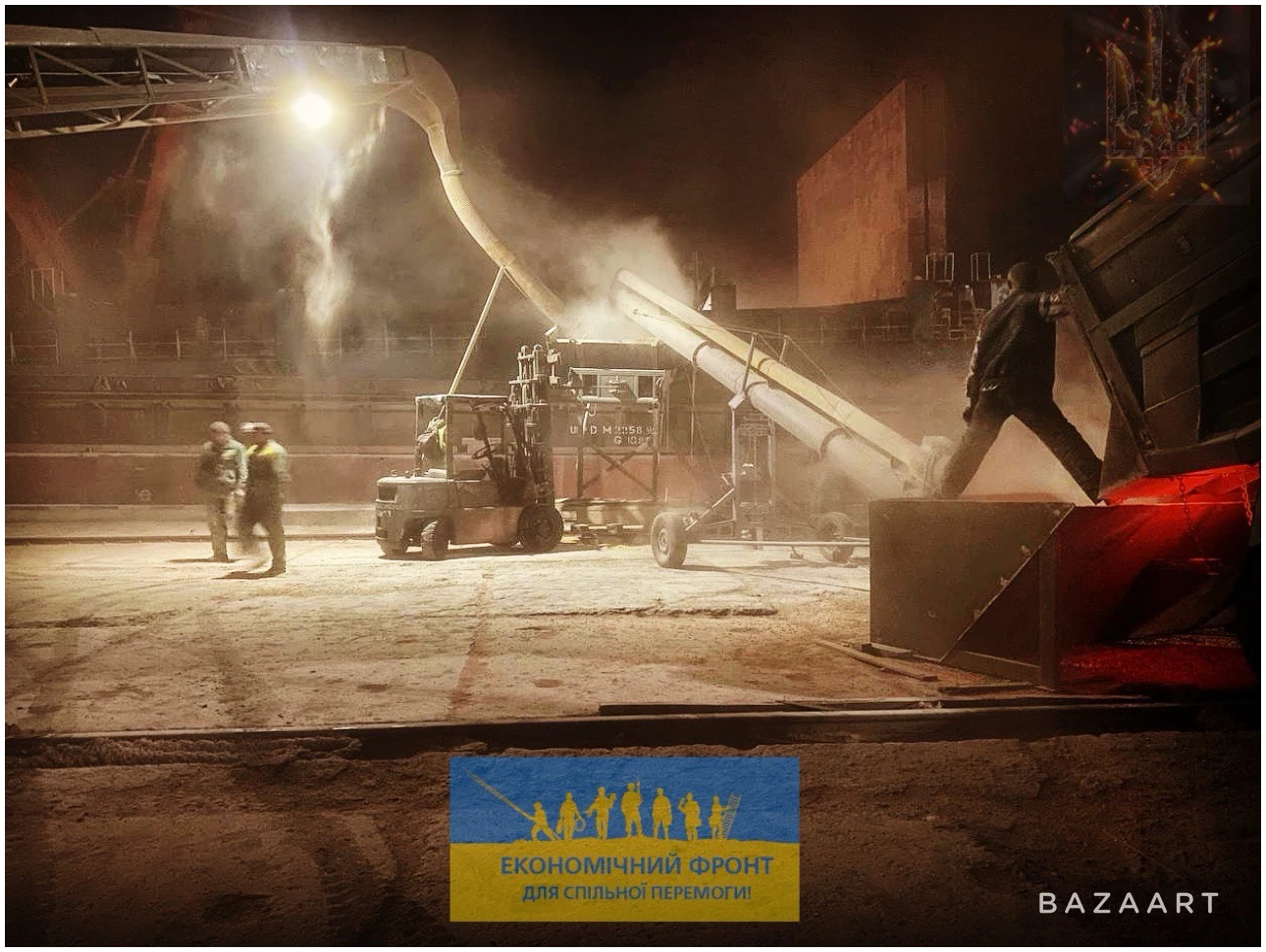
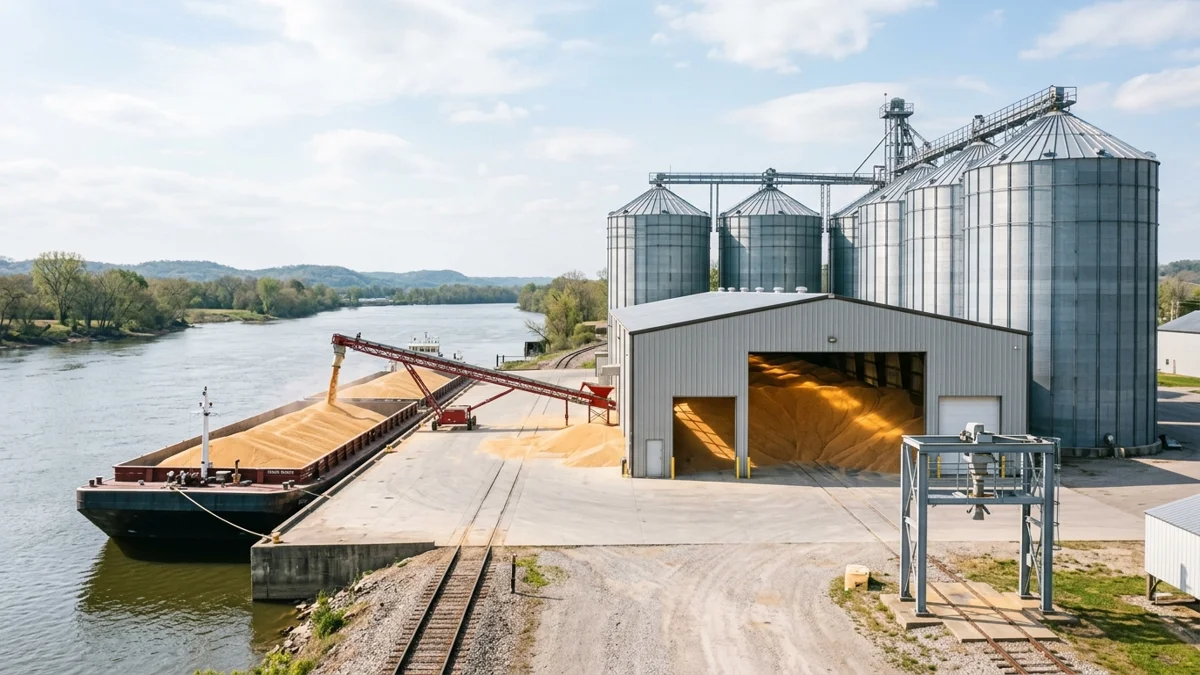
We break down grain transshipment step by step: truck and rail intake, weighing, the lab, silo storage and vessel loading. And what actually makes up the rate.
The word "transshipment" sounds technical and a little mysterious, so many farmers picture it simply as "you unload the grain and it goes somewhere." In reality, grain transshipment is a tightly built chain of operations in which every link affects the quality of the lot, the speed of shipment and, ultimately, the price. In this article we will break the process down, without jargon, into clear stages: from the moment a truck rolls onto the scales to the moment grain pours into a vessel's hold. Along the way we will explain why one transshipment costs more than another and what you are really paying for.
What transshipment means in plain words
In short, cargo transshipment is the transfer of goods from one mode of transport to another through an intermediate point. In the case of grain, that means receiving it from trucks or rail, storing it temporarily and loading it onto a vessel for sea or river export. A port terminal is exactly that point where land meets water. But between a truck driving in and a ship sailing out stand several mandatory operations, without which modern transshipment is impossible. Let us look at them in order.
Stage 1. Intake from trucks and rail
It all begins with inbound logistics. Grain arrives at the terminal through two main channels — road transport (grain trucks) and railway hopper cars. At the entrance every truck or wagon is weighed on truck or rail scales: the gross weight is recorded, then the tare weight after unloading, and the difference gives the net weight of grain. This weighing is the legal basis of the whole deal, because settlement is made on the actual tonne received. Right here, before unloading, a sample is taken for the lab — so as not to let a lot into the silo that would spoil the neighbouring grain.
Stage 2. Laboratory quality control
This is the heart of intake and one of the reasons terminals are trusted. In the lab the sample is checked against key indicators: moisture, protein content (especially important for wheat), test weight, foreign and grain admixture, pest infestation, falling number. These figures determine which class the lot is assigned to and whether it can be mixed with grain of the same type already in store.
Why the lab affects the money
- Class and price — milling-grade wheat is worth more than feed grade; an accurate analysis protects you from being downgraded.
- Moisture — grain that is too wet must be dried, and that is a separate service and a separate cost line.
- Lot purity — if there is too much admixture, the grain goes for additional cleaning before it enters the silo.
- Storage safety — an infested or wet lot must not be mixed with sound grain, or the whole silo suffers.
Stage 3. Storage in silos
Grain that has been received and checked goes into silos or storage bins, where it waits for a vessel lot to be assembled. Storage is not idle downtime: at a modern terminal the temperature inside the grain mass is monitored, the grain is ventilated and, when needed, turned to prevent self-heating and pest development. The store is precisely what lets the rhythm of intake from the fields be decoupled from the schedule of arriving ships: you can deliver the harvest when it suits you, and shipment happens when a vessel berths.
Stage 4. Vessel loading
The final link is vessel loading. From the silos, grain is moved by conveyors or elevators to the quay and pours into the holds through loading chutes. In parallel, the weight is checked again and often a control sample is taken to record the quality of the exact grain going on board. Speed here is measured in tonnes per hour: the more productive the quay equipment, the less time the ship spends under loading — and a vessel's idle time is the charterer's money.
Direct transshipment vs the warehouse scheme
In practice there are two scenarios. The warehouse scheme is the classic one: grain is received, stored in a silo and then loaded onto the ship as a separate operation. It is flexible and safe, but involves a storage charge. Direct transshipment ("from wheels to board") is when grain from trucks or wagons goes almost straight onto the vessel, bypassing prolonged storage. It is cheaper and faster, because there is no warehouse link, but it requires perfect synchronisation: the ship must already be at the berth and the trucks must arrive in a steady flow. A schedule slip on either side stops the whole scheme.
What makes up the transshipment price
Now the main question — what you are paying for. The rate for grain transshipment never boils down to a single "per tonne" figure: it is made up of several parts. The base rate covers intake, weighing and loading. Additional services — drying wet grain, cleaning out admixture, long-term storage, fumigation — are charged separately. The final cost is shaped by lot size (larger usually means a better per-tonne rate), seasonality and how busy the terminal is, the scheme (direct transshipment is cheaper than the warehouse one) and the quality of the grain itself on intake. So a fair comparison of terminals is not "who has the lower rate" but "how much will my specific lot cost with all operations taken into account."
GTK operates in the port of Kiliya on the Ukrainian Danube and builds transshipment as exactly such a transparent chain: weighing, independent laboratory control, careful storage and the loading of river-sea vessels. For exporters in the south of the Odesa region this means a short trucking leg, a predictable schedule and an honest settlement for the grain actually received. If you are planning to ship a harvest, calculate the full cost of the chain rather than just the per-tonne rate — that is how you see where transshipment is genuinely worthwhile.
Need grain transshipment or storage?
Grain terminal in Kiliya on the Danube. We'll map out your export route.
Contact us