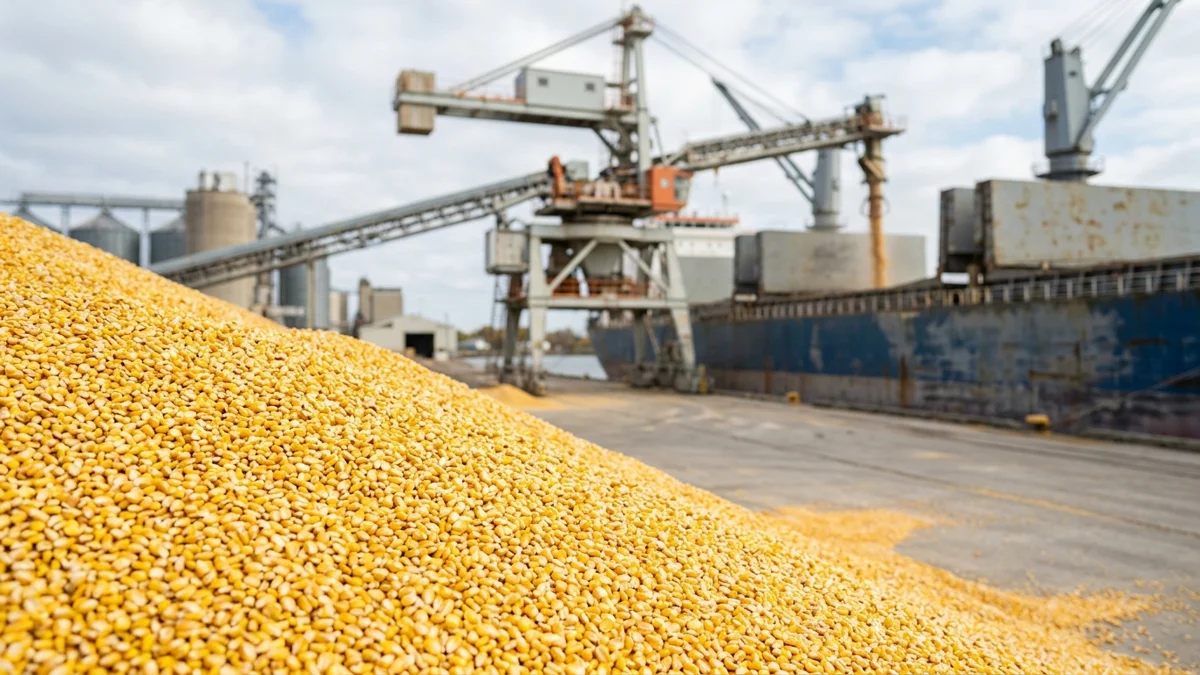
Why do wheat prices keep swinging up and down? We break down the 5 key factors that shape the grain market and port prices — in plain language.
Wheat prices rarely stand still: the market rises one week and pulls back the next. For a farmer that is the difference between a profitable sale and lost margin; for an exporter it is the moment to lock in a contract. Yet behind this seemingly chaotic movement sit a few quite understandable forces. Let's break down the five key factors that shape wheat prices on the global and Black Sea markets.
Five forces that move the market
- Global harvests and USDA balances. The monthly USDA reports on production, consumption and stocks set the overall tone. A large crop in key exporters pushes prices down; drought or a poor harvest pushes them up.
- Black Sea and Danube logistics and freight. Port availability, the cost of sea freight and transshipment decide how much grain actually reaches the market. Bottlenecks in logistics raise the final price for the buyer.
- The dollar and the cost of energy and fuel. Grain trades in dollars, so a strong dollar makes it more expensive for importers. Fuel and fertilizer prices are built into the cost of growing and moving it.
- Demand from big importers. Tenders from buyers such as Turkey and Egypt can turn the market within days. Active buying supports prices; a pause in tenders cools them down.
- Weather in producing regions. Drought, frost or prolonged rain during harvest show up instantly in quotes, because they put the volume and quality of the coming crop in question.
Why these factors act together
None of these factors works in isolation. A good global harvest can be offset by a weak dollar or a surge in Middle East demand. That is why what affects the grain price is always a combination of signals, not a single number. Traders watch all five directions at once and price expectations into quotes weeks ahead.
The grain market is not a single number but a balance between harvest, logistics, currency, demand and weather. A shift in any one of them tips the whole scale.
For a Ukrainian producer one more practical dimension is added to this global picture — port prices and the haulage leg. The short route to the Danube ports (Kiliya, Izmail, Reni) often smooths out swings in the global market: savings on logistics offset part of a drop in quotes. The GTK terminal in Kiliya helps you cost out your route and pick the best moment to ship.
Source: APK-Inform
Need grain transshipment or storage?
Grain terminal in Kiliya on the Danube. We'll map out your export route.
Contact us